Strip away the jargon and AI automation for small business is simple: it's software that does a repetitive task for you, using AI to make the judgement calls a basic rule can't handle.
That second half is the whole point. Old-school automation could already move a file or send a templated email, as long as the situation was perfectly predictable. AI automation for small business is different because AI can read a messy, real-world input, work out what it actually is, and decide what to do. It copes with the mess. That's new, and for a small business it changes what's worth handing over.
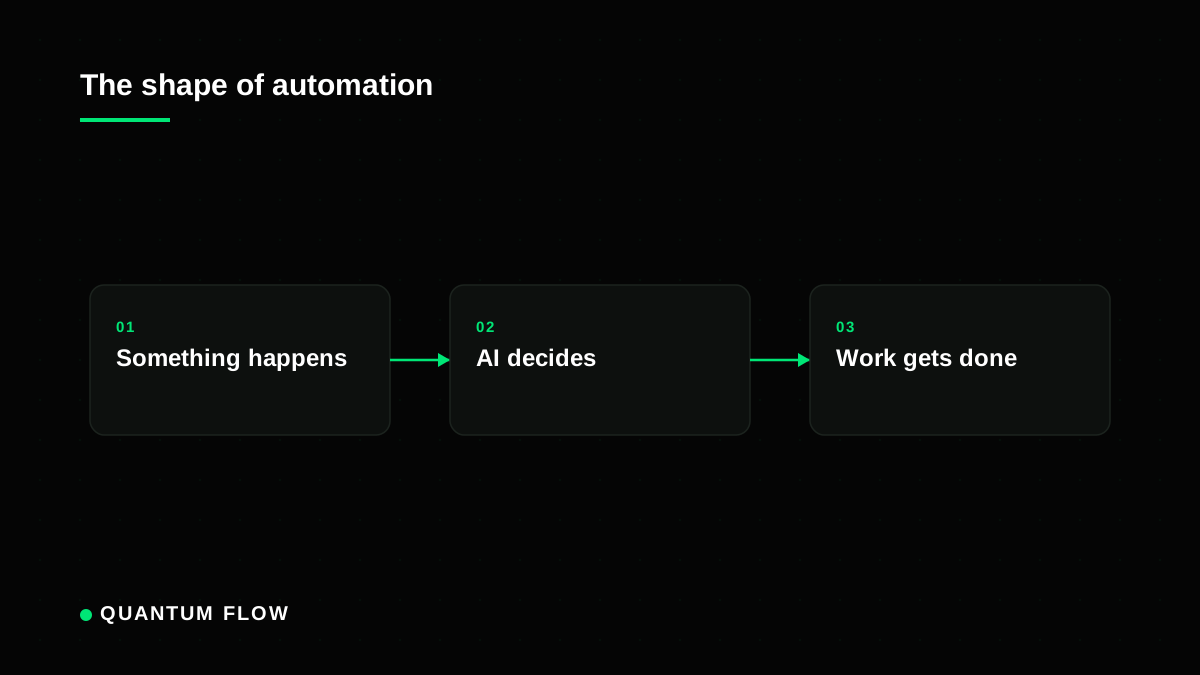
The shape of every automation
Once you've seen the pattern, you'll spot it everywhere. Nearly every useful automation has the same three-step shape.
Something happens. The AI decides. The work gets done.
That's it. A trigger sets it off: an email arrives, a form is filled in, a date rolls round, an invoice lands. The AI reads what's in front of it and makes a call about what it means and what should happen. Then the actual work happens: a reply drafted, a record created, a document summarised, an enquiry routed to the right person.
Compare that to a rigid rule. "If the subject line contains the word invoice, move it to a folder" works right up until someone writes "here's what we owe you" instead. AI fills that gap. It reads the message like a person would and understands it's an invoice regardless of the wording. That flexibility is why it can take on work that used to need a human's eyes.
What it actually looks like in a real business
Abstract definitions only get you so far. Here are four automations that quietly run in businesses like yours:
- Classify and route an enquiry. A message comes in through your website. The AI works out whether it's a sales lead, a support question, or a supplier chasing payment, and sends it to the right place with the right priority.
- Draft a reply. For routine emails, the AI writes a first draft in your tone of voice, ready for you to glance over and send. The blank page is gone.
- Create a CRM record. A new lead lands and a properly filled-in record appears in your CRM automatically. No more "I'll add them later" that never happens.
- Summarise a document. A long report, contract, or call transcript comes in, and you get a tight summary of the parts that matter instead of reading twelve pages.
None of these are exotic. They're the boring, constant admin that eats a small team's week. Which is exactly why automating them is worth so much.
Start with the problem, not the tech
Here's the mistake I watch owners make. They decide they "want to use AI" and go looking for something to point it at. That's backwards, and it's why so many AI experiments fizzle out.
Start with the problem. A good brief sounds like this: "We spend 15 hours a week processing supplier invoices, and about 8 per cent of them have an error we have to chase." That's specific. It has a number, a cost, and a clear target. You can build against it and know whether it worked.
"We want to use AI" isn't a brief. It's a wish.
The businesses that win with AI don't ask "what can AI do?" They ask "which task is costing us the most, and can AI take it?"
So before you look at a single tool, write down the two or three tasks that are repetitive, time-consuming, and don't really need your personal judgement to get done. That list is your starting point. If you want a hand deciding what goes first, our guide to the first things worth automating is built for exactly that moment.
What it costs, and what you get back
Let's talk numbers, because that's what owners actually want to know.
Running costs for AI automation commonly land somewhere between £50 and £300 a month, depending on how much work you're putting through it and how many tools it touches. That's the ballpark for the software doing the running.
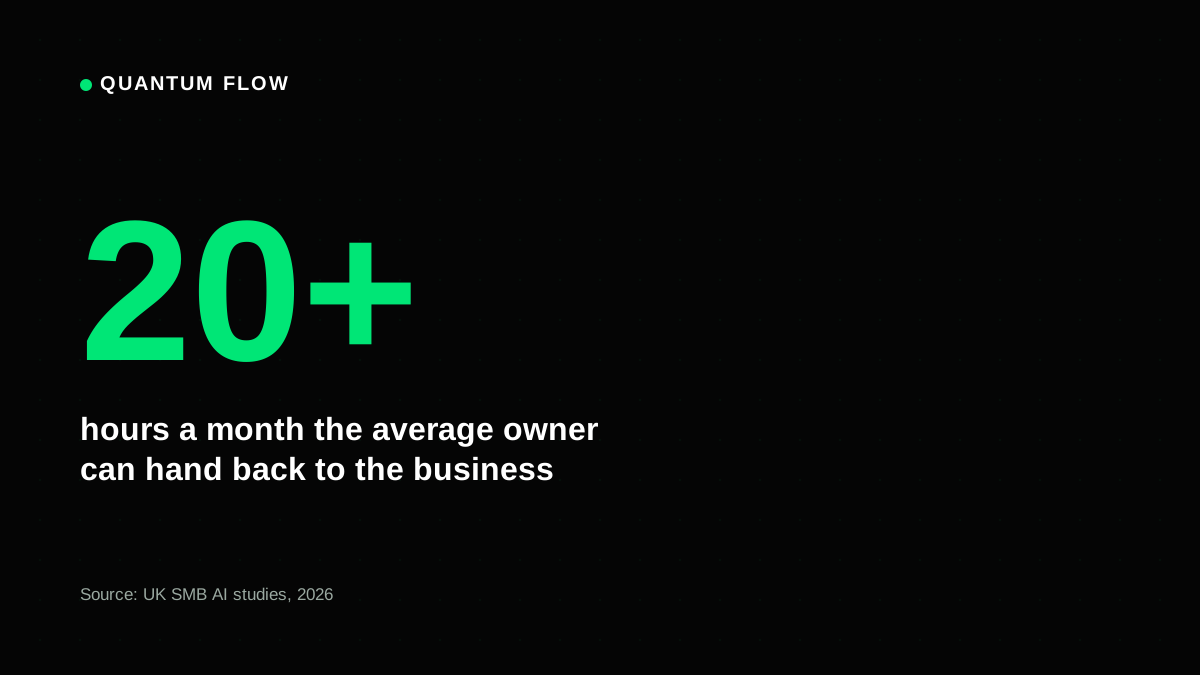
Against that, a small business owner can realistically save 20 or more hours a month once a few solid automations are in place. Picture a Lancashire recruiter spending five hours a week formatting CVs and chasing candidate updates. Hand that to an automation and it's most of a working day back, every week, for the price of a couple of takeaways.
Do the sum and it's rarely close. The value isn't in the software being cheap. It's in the hours it frees up landing back on work that actually grows the business. If you want the fuller costing picture, we broke it down in how much AI automation costs a UK small business.
And there's a second return that doesn't show up on a timesheet. When the same task gets done the same way every time, the errors drop. That recruiter's CVs come out consistently formatted. The invoices get chased on day 30 without fail, not whenever someone happens to remember. Fewer mistakes, fewer awkward "sorry, we missed that" emails to clients. Ask any owner what those cost and they'll tell you it's more than the hours.
A fair word on what it can't do
It's worth being straight about the limits, because overselling AI automation is how people end up disappointed.
It won't do everything, and it shouldn't. Anything that needs real judgement, a delicate client conversation, or a genuinely creative leap is still your team's job. AI automation is at its best on the high-volume, repetitive, lower-stakes work — the stuff that's important but doesn't need your brain. Point it there, keep a human reviewing anything that goes out the door, and it earns its keep. Point it at the hard, human stuff and expect it to run unsupervised, and you'll be cleaning up after it. Used well, it's not magic. It's just a very reliable pair of hands for the boring parts.
Automation isn't another subscription, it's a system
This is the shift that matters, and it's where a lot of well-meaning attempts go wrong.
Bolting on ten disconnected AI tools that don't talk to each other just gives you ten more logins and ten more bills. You end up busier, not freer. Real AI automation is a connected system: the pieces share context and hand work between each other, so the whole thing is worth more than the sum of the parts.
That's the difference between a drawer full of gadgets and something that genuinely runs your admin. It's also the idea behind an AI Operating System: a single layer that knows your business and does real work across your existing tools, rather than another app to babysit. We laid out the full case for that approach in why UK businesses need an AI Operating System.
Where to start
You don't need to automate everything at once. You need one problem, clearly defined, with a number attached — and a first automation that gives you an obvious win.
We install AI Operating Systems for UK service and knowledge businesses, starting with the tasks that cost you the most time. The build takes three to four weeks, and the guarantee is plain: if you're not saving 10 hours a week by the end of month one, we keep building for free until you are.
Book a free 30-minute business-mapping call. We'll walk through your week, find the tasks worth handing over, and tell you honestly what's realistic. No pressure, no jargon.