In November 2024, Anthropic published an open standard called the Model Context Protocol. Eighteen months later, it has 97 million monthly SDK downloads, 9,600-plus published servers, and adoption from every major AI provider — Anthropic, OpenAI, Google DeepMind, and Microsoft. If you are building AI agents for your business, or planning to, understanding MCP is no longer optional. It is the plumbing that determines how powerful your agents can actually become.
The Problem MCP Solves
Connecting an AI agent to your business tools used to mean writing a custom integration for each one. Email: one connector. Slack: another. CRM: another. Database: another. Each connector had its own authentication approach, its own error handling, and its own maintenance overhead.
Add four tools and you have four bespoke integrations to build and keep running. Add ten and you have a sprawling integration problem that becomes its own full-time job — brittle, expensive, and increasingly difficult to change. Most businesses we work with had shelved ambitious AI plans simply because the integration overhead made them impractical.
This is the problem the OpenClaw architecture addresses at the orchestration level — a hub-and-spoke model separating agent logic from tool connections. MCP goes a layer deeper by standardising how each spoke works. Instead of every tool speaking a different language, they all speak MCP.

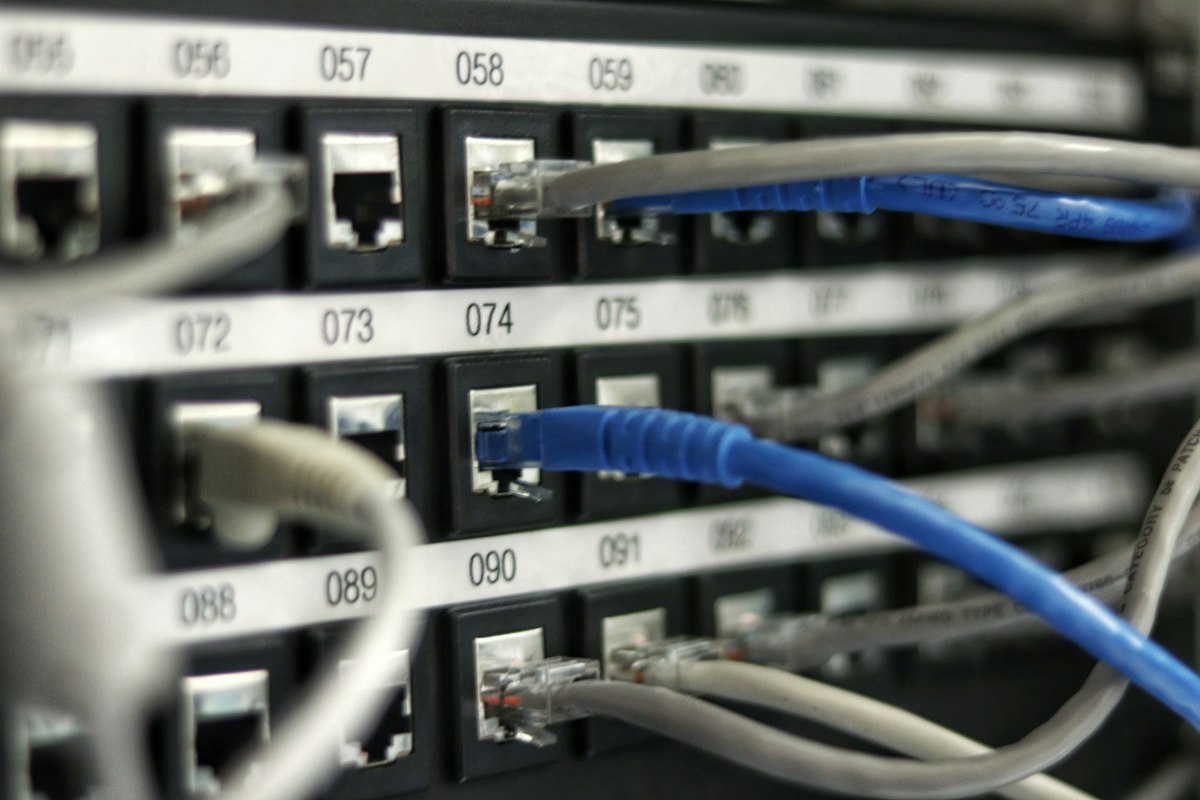
MCP is to AI agents what USB-C is to devices: one standard port, and every tool, every data source, every service connects through it the same way.
How the Model Context Protocol Works
MCP defines a protocol between two things: the AI client (your agent) and MCP servers (the connectors to your tools). The client discovers what a server offers, then calls it as needed during a task. The key insight is that the client does not need to be pre-programmed for each tool — it discovers capabilities at runtime through the protocol.
Each MCP server exposes three types of things:
- Tools — executable functions the agent can call. "Send an email." "Create a CRM record." "Run a database query." "Post a Slack message." Tools are the actions.
- Resources — data entities the agent can read. The contents of a document, a customer record, a calendar event, the last 30 rows of a spreadsheet. Resources are the information.
- Prompts — standardised templates that guide how the agent interacts with a given tool or data source. A well-defined prompt for a CRM server specifies the correct way to query contact data — no guesswork, no hallucinated field names.
When your agent connects to an MCP server, it gets a structured description of everything that server can do. It then decides — based on the task at hand — which tools to call, which resources to read, and how to sequence them. The model handles the logic. MCP provides the connectors.

What This Means If You're Building AI Agents Today
For businesses building on AI in 2026, MCP changes three things in practice.
Integration cost drops significantly. Before MCP, each new tool your agent needed to use was a custom engineering project. With MCP, if a tool has a published server, connecting it is a configuration exercise, not a build job. Right now there are community-built MCP servers for GitHub, Slack, PostgreSQL, HubSpot, Salesforce, Xero, Stripe, Google Drive, Notion, and over 9,600 others. The odds that your tools are already covered are high — and growing weekly.
Agents become more capable without getting harder to maintain. A traditional multi-tool agent required bespoke integration code for each tool — a bigger codebase, more test surface, more things to break. An MCP-based agent uses a single protocol for all tool connections. Add a new capability: plug in a new server. Remove one: unplug it. The agent logic stays clean.
Your agents are no longer tied to one AI provider. Because MCP is an open standard adopted by Anthropic, OpenAI, and Google, an agent built on MCP can swap models underneath without rewriting its integrations. You are buying capabilities, not lock-in.
For the self-hosted agent deployments we run on Google Cloud, MCP has been the most meaningful engineering change in the past 12 months. Integrations that previously took days to build now take hours. Maintenance overhead for the integration layer has dropped by roughly 60%.
What the Numbers Actually Show

A few data points worth anchoring to, from published sources as of Q2 2026:
- MCP's TypeScript and Python SDKs went from approximately 2 million monthly downloads at launch to 97 million by March 2026 — a 4,750% increase in 16 months
- The official MCP registry reached 9,652 published servers as of late May 2026, growing at 58% quarter-on-quarter
- 41% of surveyed software organisations have MCP in limited or broad production (Stacklok 2026 Software Report)
- Gartner projects that by end 2026, 75% of API gateway vendors will have MCP features
- Forrester expects 30% of enterprise application vendors to launch their own MCP servers in 2026
The adoption curve here is not the slow climb of a committee-designed standard. MCP solved a genuine, painful problem, and engineers recognised it fast.
When a protocol goes from 2 million to 97 million monthly downloads in 16 months, it is not trending. It is becoming infrastructure.
The Gotchas Worth Knowing About
Any engineering article that skips the failure modes is trying to sell you something. MCP has real trade-offs.
Context window consumption adds up. Each MCP server you connect adds its tool definitions to the model's context. Four common servers — Linear, Notion, Slack, and Postgres — can consume over 10% of an LLM's context window through tool descriptions alone. On a model with a 128K context window, that is significant. On a model with the 2 million token context windows now available, it is a much smaller concern — but it is still an architectural consideration worth planning around. Connect only the servers your agent actually needs for a given task, not every server you have available.
Security surface expands with each server. An MCP server with write access to your CRM and your email is powerful — and a meaningful attack surface. The Coalition for Secure AI published a practical MCP security guide in early 2026 that covers the key controls. The short version: treat MCP servers like any privileged API endpoint. Audit what access each server has. Use scoped credentials. Log everything.
Not all community servers are production-ready. The ecosystem has grown fast, which means some community-built MCP servers are maintained by a single developer between other projects. Before relying on a third-party server in production, check the repo activity, the issue tracker, and whether there is a proper versioning scheme. If it matters to your operation, you may need to fork and own it.
Where MCP Is Heading in 2026

The 2026 MCP roadmap addresses the most common production concerns directly.
The stateless HTTP transport variant being added to the spec will allow MCP servers to scale horizontally behind standard load balancers without maintaining persistent connections. For always-on agent deployments handling high request volumes, this removes a significant infrastructure constraint.
The Tasks primitive introduces asynchronous, long-running operations — an agent can dispatch a job and poll for completion rather than blocking. This is the missing piece for agents that need to trigger background processes: data exports, report generation, multi-step workflows that take minutes rather than milliseconds.
OAuth 2.1 and MCP Gateways bring production-ready authentication and centralised management to the protocol. Instead of managing credentials per server, you manage them through a gateway that enforces access control, rate limits, and audit logging. For any deployment that needs to pass a security review, this is the infrastructure that makes MCP viable in regulated environments.
We are testing the gateway configuration on current deployments now. The impact on how we build and maintain the agent stack will be significant — less per-server credential management, better audit trails, cleaner access control.
If you are building AI agents for your business and have not started thinking about MCP, now is the time. The ecosystem has matured enough to rely on in production, and the businesses that understand the infrastructure will build faster and maintain less. If you want to explore what an MCP-native agent stack would look like for your operation, get in touch and we will walk you through it.