Most UK service businesses running AI agents edit prompts like text in a box. They open the system prompt, make a change, hit save, and the agent immediately behaves differently — with no record of what changed, no way to compare old versus new behaviour, and no route back if the change breaks something. When a client calls to say the agent gave the wrong output this morning, the question "what changed?" has no answer. Prompt versioning solves that — and it is the engineering practice most teams building production AI agents skip entirely.
Prompts Are Code — Start Treating Them That Way

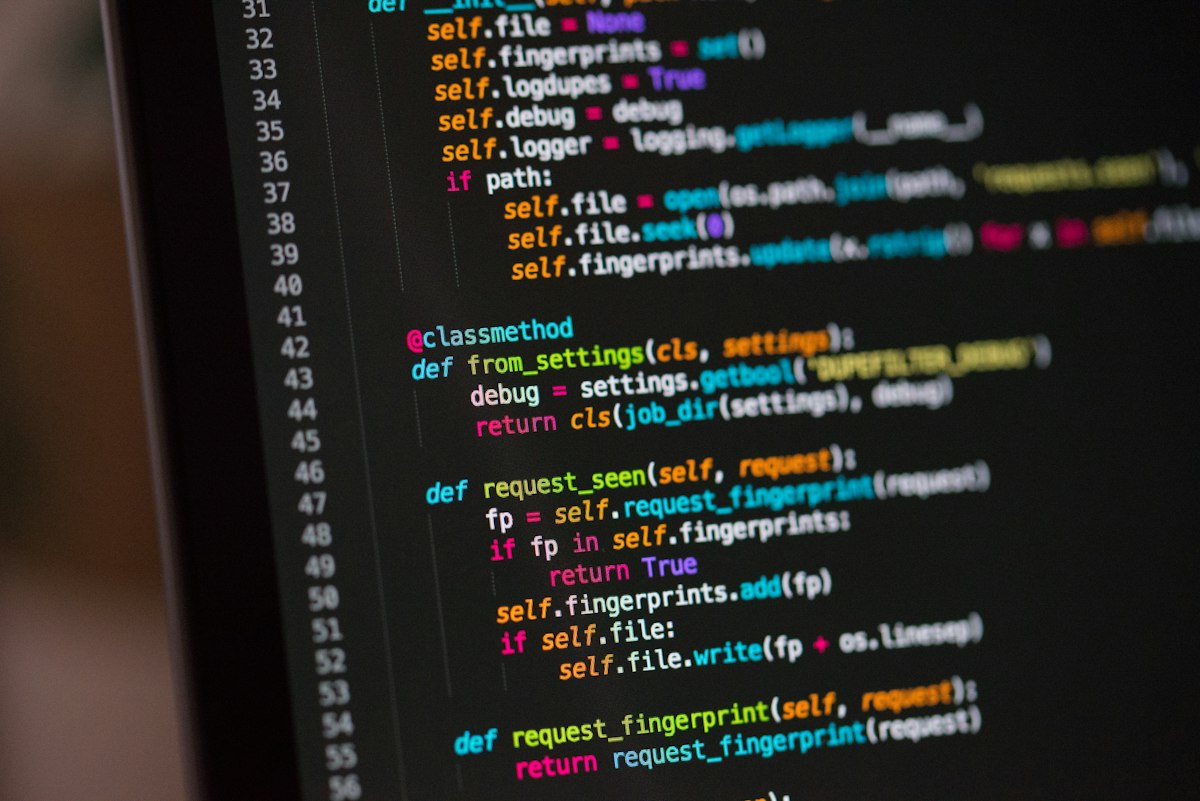
The most common mistake in production AI agent engineering is treating prompts as configuration rather than as code. Configuration can be changed casually because a wrong value usually produces an obvious, immediate error. Code changes are managed carefully because a subtle change can break something that worked perfectly yesterday in a way that only surfaces weeks later under specific conditions.
Prompts behave like code, not configuration. The instructions you give an AI agent determine its behaviour across every task it runs. A single-word change — "summarise" to "extract" — can shift the output format in a way that breaks every downstream integration depending on that output. A new sentence clarifying one edge case can inadvertently change how the agent handles the core task. A tone instruction added to improve client-facing language can suppress factual detail the agent was previously including.
Prompts decide product behaviour. Most teams edit them like a value in a text box — no history, no diff, no rollback. That is the same as deploying code changes with no version control and no way to revert.
The standard disciplines of software engineering exist for exactly this problem: version control, semantic versioning, review gates, and rollback capability. Applied to prompts, these practices turn prompt management from a source of silent failures into a controlled, auditable engineering process.
The business case is not abstract. In a production AI operating system serving five or more clients, the cost of a prompt-related failure includes: the client impact, the investigation time to identify what changed, the time to restore the previous state, and the confidence damage from an unexplained inconsistency. A prompt registry with versioning reduces mean time to recovery from hours — sometimes days — to minutes. That is the whole argument for doing it.
Four Prompt Versioning Patterns for Production AI Agents

Pattern 1: Freeze and Increment. The fundamental rule of production prompt versioning: once a prompt version is published to production, it is frozen. Any change — including a spelling correction — creates a new version. The old version is never modified; it is only superseded.
This sounds more restrictive than it is in practice. The discipline it enforces is that every change is deliberate, documented, and testable. Version numbers follow a simple semantic scheme: major versions (v1 → v2) for changes that alter output format or agent behaviour meaningfully; minor versions (v1.0 → v1.1) for refinements that should be backwards-compatible; patch versions (v1.0.0 → v1.0.1) for typo fixes and small clarifications.
The payoff is immediate: when an agent starts producing unexpected outputs, the first question — "what changed in the prompt?" — has a clear answer. Roll to the previous version, verify the behaviour returns, and the investigation can focus on the new version's delta rather than trying to reconstruct from memory what the prompt looked like before the change.
Pattern 2: Git-Backed Prompt Storage. The simplest implementation stores prompts as text files in a git repository — the same repository as the agent code, or a dedicated prompt registry repo. Each prompt lives in a named file. Changes go through pull requests. PRs require a brief description of what changed and why. Merges to main trigger evaluation runs.
This costs almost nothing to implement and immediately provides the full history of every change, who made it, when, and what the diff was. For teams already using git for code, it is a natural extension. The only habit that needs to change is treating the prompts directory with the same care as the application code. For teams not yet using git for agent code, a folder structure with consistent file naming and a changelog document achieves most of the same benefits as a minimum viable start.
Pattern 3: Blue/Green Prompt Deployment. Borrowed from deployment engineering, blue/green prompt deployment runs the new prompt version alongside the old one before cutting over. A routing layer sends a small percentage of production traffic to the new version while the majority continues on the proven version. Metrics — task completion rate, output format compliance, human review flags — are compared across the two versions over a defined period.
This pattern is particularly valuable for high-stakes agents: proposal writers, client-facing chat agents, compliance-sensitive reporting workflows. The confidence requirement before full cutover is empirical rather than assumed. If the new version underperforms on any metric, rollback is a pointer swap: change the routing percentage back to 0% for the new version and 100% for the old. The AI agent deployment patterns post covers this architecture in detail — blue/green applies to both code deployments and prompt deployments using the same infrastructure.
Pattern 4: Chained-Prompt Versioning. This is the pattern most teams discover only after it causes a production incident. In a multi-agent system, one agent's output is another agent's input. A prompt change in an early-stage agent changes the input distribution for every downstream agent — even if none of their prompts changed.
The engineering implication is that prompt versions in a pipeline cannot be managed in isolation. A versioning system for multi-agent workflows needs to track not just individual prompt versions but pipeline-level compatibility: which versions of which prompts work together. A simple table recording "Agent A v1.2 → Agent B v2.0 → Agent C v1.1" as a tested, working combination is more useful than three separate version histories with no cross-reference.
The Chained-Prompt Problem in Production
The classic failure scenario: a business analyst updates the system prompt of a document-parsing agent to improve how it handles UK-specific date formats. The change passes evaluation on the parsing task. It ships to production on a Tuesday.
Three days later, the downstream report-writing agent starts producing summaries with inconsistent date references. A formatting change propagated from the parser's new output structure has shifted something the report writer was relying on. The report writer's prompt has not changed. Its evaluation suite did not catch the issue because the eval inputs were drawn from a fixed test set, not from live outputs of the updated parser.
The failure is not the prompt change. The failure is the absence of a system-level test that runs the full pipeline against representative inputs after any component prompt changes. Pipeline-level evaluation catches this class of failure; component-level evaluation does not.
In a multi-agent pipeline, every component is a dependency. A prompt change in one agent is a dependency change for all agents downstream. That is the engineering reality most teams only learn after their first unexplained production incident.
The practice is not complex to implement. For each multi-agent workflow, define a set of end-to-end test cases that run from input to final output. Run them on every component prompt change. The test cases should cover normal operation, edge cases, and known failure modes — in the same way a software integration test suite would. The AI agent CI/CD pipeline post covers the four-layer testing architecture that prompt versioning fits into as the foundation layer.
The Practical Versioning Stack Without Engineering Overhead

For UK service businesses building AI agents on n8n, make.com, or similar no-code and low-code platforms, the versioning stack does not need to be complex. A practical implementation for a small team managing three to ten agents:
- Storage: A dedicated folder in a git repository for prompt files. Each file named with version:
proposal-writer-v1.2.txt. If git is not yet in use, a Google Drive folder with strict naming conventions is a minimum viable start that still provides history. - Change process: Any prompt change requires a brief written note — one sentence minimum — explaining what changed and why. This becomes the commit message. It sounds like friction; it takes 30 seconds and becomes invaluable at incident review. The discipline of writing the reason forces the question: "do I actually know why I am making this change?"
- Deployment gate: Before any prompt version change goes to production, run your standard evaluation suite against the new version. For most workflows, this is 10–20 test cases per agent. If pass rate drops below your defined threshold, the change does not ship.
- Rollback: Keep the last two working versions immediately accessible — not archived, but ready to swap in. Define what "immediately accessible" means before you need it. A rollback that takes three minutes is a recoverable incident. A rollback that takes three hours while a client's agent is producing wrong outputs is a reputational event.
- Pipeline documentation: For any workflow where Agent A feeds Agent B, document which prompt versions are deployed together. A simple table in Notion or Confluence that tracks the current production combination is enough to start.
The investment to implement this for an existing AI operating system is typically four to six hours. The output guardrails engineering post and the context engineering post both assume a prompt versioning layer underneath them — without it, neither pattern can be implemented reliably, because you lose the ability to attribute output changes to specific prompt decisions.
What Good Looks Like in a Production AI Agent Stack

A well-versioned AI agent stack has five characteristics that distinguish it from one being managed reactively:
- Every prompt in production has a version number and a written rationale for the most recent change.
- Rolling back any agent to its previous version takes under five minutes.
- Pipeline prompt changes are tested end-to-end before deployment, not just component-by-component.
- When an agent produces unexpected output, "what changed?" has an answer within two minutes.
- The team can confidently make prompt improvements because they know every change is reversible without consequence.
None of this requires specialised tooling or significant engineering overhead. It requires treating prompts with the same discipline that good engineering teams apply to any code that runs in production. The habit, not the toolset, is the difference.
For UK service businesses building out an AI operating system — multiple agents, multiple clients, production-critical workflows — prompt versioning is the engineering practice that keeps the system stable as it grows. Without it, every prompt improvement is also an uncontrolled risk. With it, every prompt improvement is a deliberate, testable, reversible change that can be shipped with confidence.
If you are building production AI agents for your UK service business and want an operating system architected for reliability from the start — including structured prompt versioning, evaluation pipelines, and fault-tolerant deployment patterns — speak to the Quantum Flow team. We build AI operating systems that stay stable under real-world conditions, not just demos that work once.